We are launching a new process aimed at strengthening the connection between local organic food producers and public institutions across Macedonia – starting with kindergartens and schools. The goal is simple but important: to support healthier eating habits for children while at the same time creating stronger, shorter, and more sustainable food supply chains that benefit local farmers.
This initiative is developed within the broader framework of FEAST 2030, which focuses on supporting transitions towards healthier and more sustainable diets through systemic, place-based interventions.
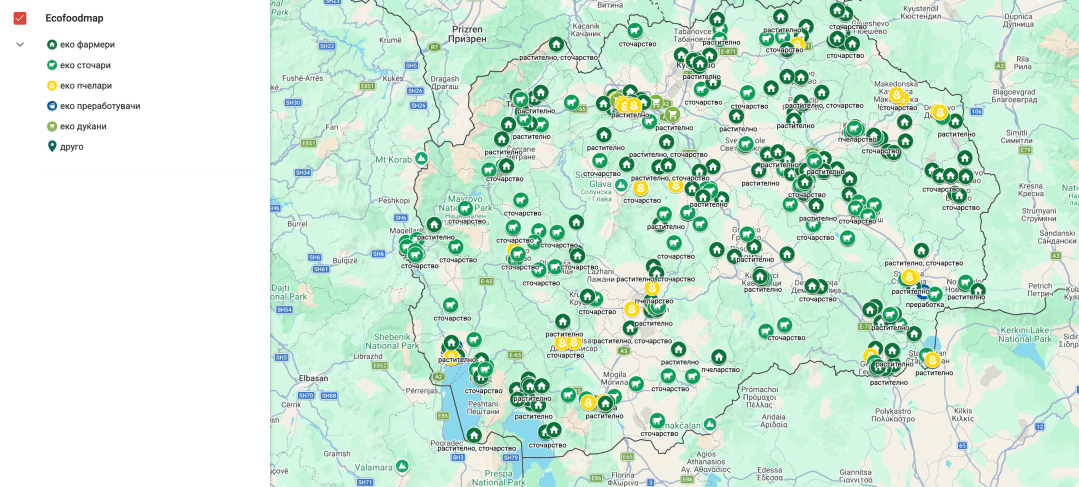
At the heart of this process is the development of an Eco Food Map – a practical, evolving tool that brings visibility to organic producers and situates them in relation to nearby public institutions. By highlighting proximity, the map opens up new possibilities for more localized public procurement of food, encouraging institutions to source fresh, organic products from nearby farms whenever possible.
This is only the first iteration of the map. It currently includes publicly available data on certified organic operators in Macedonia, drawing primarily from the country’s two main certification bodies, Balkan Biosert and ProSert. The dataset covers different types of production, from plant and livestock farming to processed agricultural products and operators in conversion. As the initiative grows, we aim to expand and refine this information through collaboration and direct engagement with stakeholders.
More importantly, this is not just a mapping exercise—it is an open invitation. We are seeking to connect with:
- Associations of farmers and organic producers
- Individual producers and cooperatives
- Public institutions (especially kindergartens, schools, and municipalities)
- Researchers, NGOs, and others working within the food system
Our shared objective is to build a more resilient, transparent, and health-oriented food ecosystem that reduces the distance between producers and consumers, supports local economies, and improves the quality of food available to children.
By lowering the length and complexity of the food chain, we can create conditions where public procurement becomes not only more sustainable, but also more responsive to local capacities and needs.
Explore the ecofood map here or below:
 Arete Sustainability